Osteopathy vs Massage: What’s the Difference?
Osteopathy vs massage is one of the most common questions I get in the clinic.
Most people have had a massage. Fewer have heard of osteopathy. And when they do, the first question is almost always the same:
“Is osteopathy just a gentler version of massage?”
It’s a fair question. Both are hands-on, both aim to help you feel better, and both can leave you feeling looser, lighter, and more aligned. But the answer goes deeper than just the pressure used during a session.
As someone who spent almost two decades as a massage therapist before training in osteopathy, I’ve lived both approaches. And the difference isn’t just in what you do — it’s in how you see the body.
Massage starts at the surface and works in. Osteopathy starts at the centre and works out.
This post isn’t about which one is “better.” It’s about helping you understand the difference, so you can choose what’s right for your body.
Massage Therapy: The Outside-In Approach
Most people already know what massage feels like — and why they keep going back.
It increases circulation to tired or overloaded tissue. It reduces muscle tension. It calms the nervous system. For stress, recovery, and that particular kind of full-body fatigue that accumulates over a busy week, it’s hard to beat.
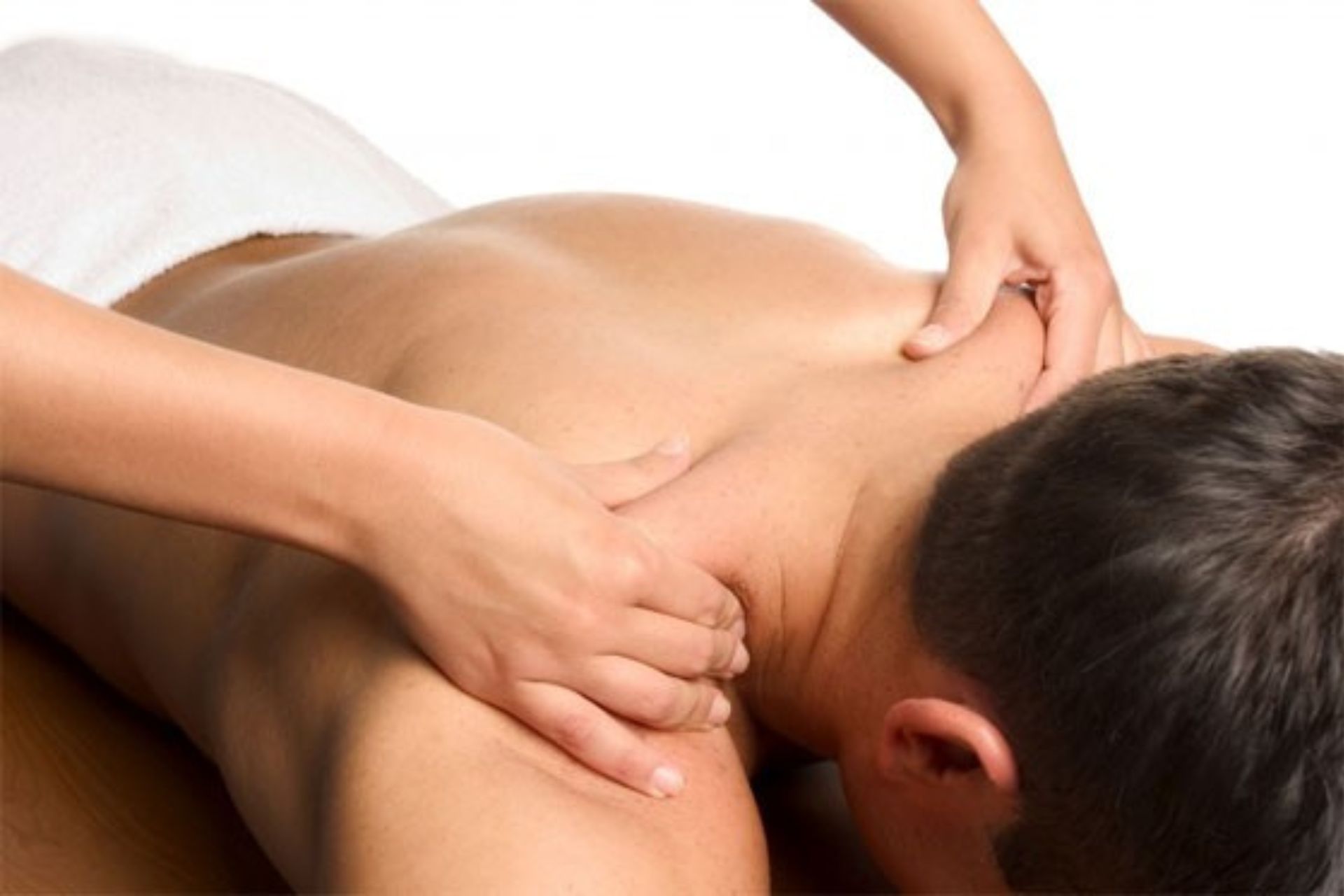
Most massage works at the level of muscle and soft tissue — releasing tension, improving blood flow, helping the body downregulate from a heightened state.
A typical session might involve assessing muscle tone and joint range, releasing trigger points, improving circulation, and using deep tissue work or stretching to reduce tension. The result is real, and for many people, regular massage is one of the best things they do for their health.
But in nearly two decades of massage work, I saw the same pattern constantly — clients who came in every few weeks for the same tight spot, got relief, and were back with the same problem a month later. The treatment was working. The underlying cause wasn’t being addressed.
Massage works with what’s happening at the surface, to the tension in the tissue that you can touch and feel.
Osteopathy steps back to ask, why is that tension there in the first place?
It wasn’t that one was better than the other. They were simply working from different maps.
Osteopathy: The Inside-Out Perspective
While massage therapy taught me how to feel tension and treat discomfort, osteopathy taught me how to listen to the body in a completely different way. I realized the two approaches weren’t just using different techniques, they were asking fundamentally different questions.
Not just where does it hurt — but why is it holding tension, what’s driving the pattern, and what does this part of the body have to do with that part over there that doesn’t seem related at all?
That shift in question changes everything about the approach.
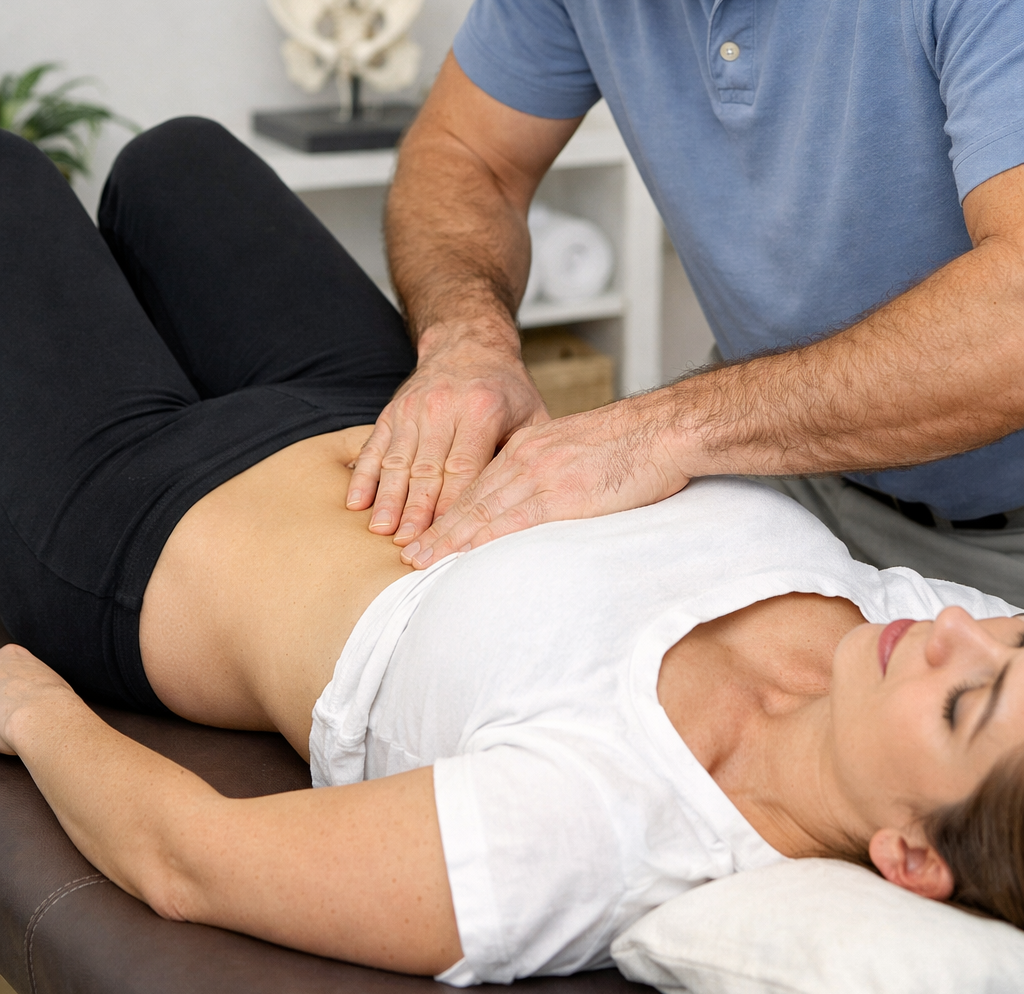
Osteopathy is built on the idea that the body is one functional unit where structure affects function — that the way the body is organised, aligned, and moving determines how well it works. When something is restricted, the body compensates. Those compensations create their own restrictions. And over time, what started as a tight shoulder becomes a pattern that involves the neck, the ribs, the thoracic spine, and the way you breathe.
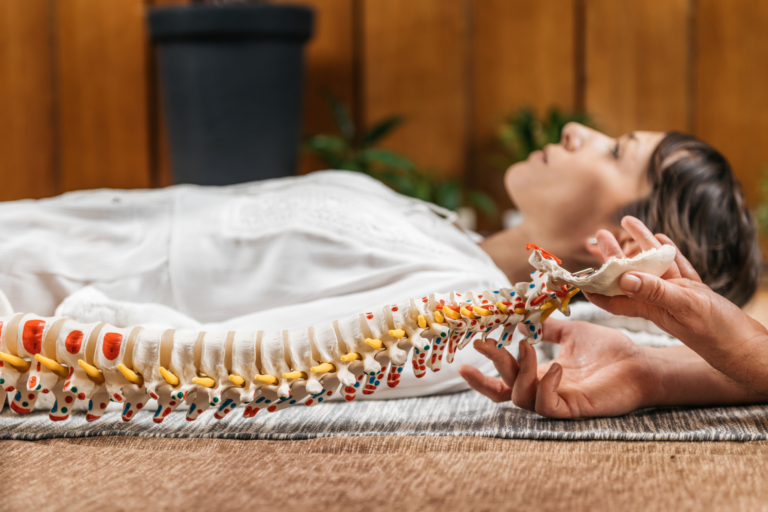
This whole-body view comes from a philosophy developed in the late 1800s by Dr. A.T. Still. He believed that the body has the ability to self-regulate and heal — if nothing is obstructing it. That means osteopathic training is focused on identifying restrictions in the body’s communication systems: nerves, blood vessels, breath, fascia, even fluid motion within bones.
Where massage often treats the site of pain, osteopathy looks for what’s driving the pain, and then works to change the pattern, not just the symptom.
The Role of Fascia
Here’s a key difference that doesn’t get talked about enough.
Massage primarily works with muscle. Osteopathy works with the entire system — including fascia, joints, the nervous system, and the vascular structures.
Fascia is the continuous web of connective tissue that links everything in the body. It wraps around muscles, organs, nerves, and bones — and it transmits tension across the whole structure. When one area tightens, that tension travels. An old ankle sprain can quietly alter how the spine stacks. A restriction in the ribcage can affect shoulder mechanics. A scar from a surgery years ago can create a pull that shows up as chronic tightness somewhere completely unrelated.
In osteopathic training, the palpation skills go well beyond muscles. We learn to feel arterial flow, fascial tension, fluid rhythms, and cranial motion. The first time I heard someone talk about treating vascular flow for lower back pain, I thought it was absurd. Now it’s something I do regularly — because when you understand how the body is connected, it makes complete sense.
Fascial restrictions don’t always respond to soft tissue work alone. They need to be understood in context — as part of a whole-body pattern — and addressed accordingly.
Assessment Changes Everything
One of the most practical differences between osteopathy and massage is what happens before treatment even starts.
A massage therapist will ask where you’re tight and get to work. That’s appropriate for what massage is designed to do.
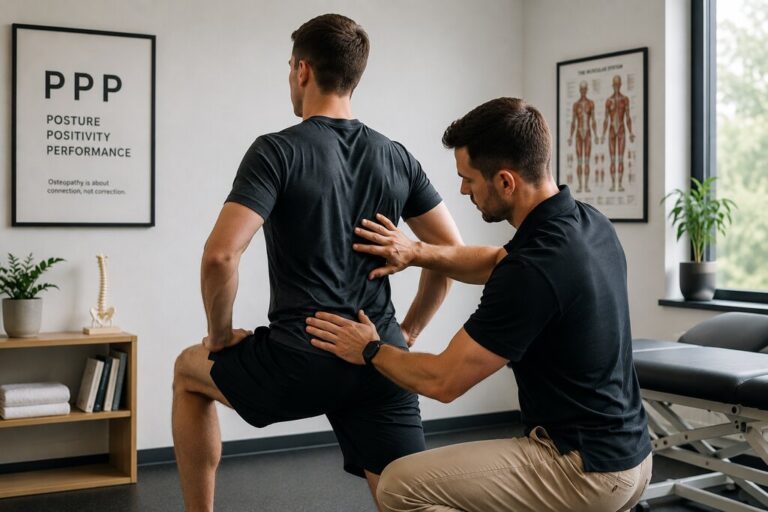
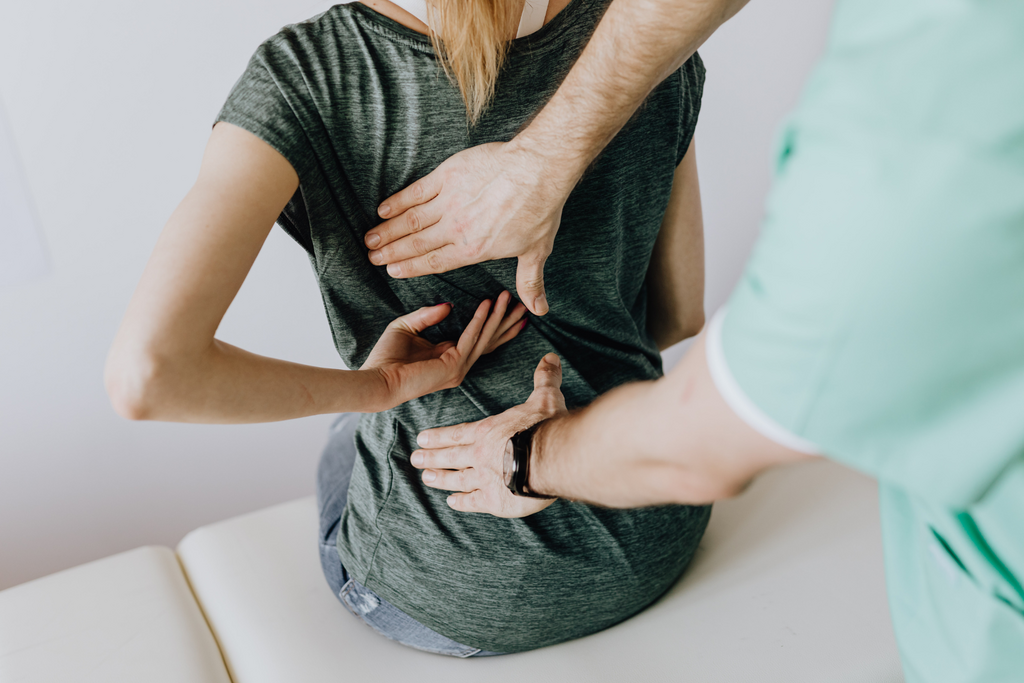
An osteopath will assess how you move, how you stand, how you breathe, and what’s happening in parts of the body that aren’t obviously connected to your complaint. They’re building a picture — looking for the original restriction that set the compensation pattern in motion, not just the place where that pattern is currently showing up as pain.
That assessment shapes everything that follows. It’s why osteopathic treatment can look quite different from session to session, and why it often addresses areas that feel completely fine — because that’s where the real work needs to happen.
Key Differences at a Glance
Massage and osteopathy are both hands-on therapies grounded in anatomy and physiology. They both help people move and feel better. But their focus, training, and approach are distinct.
Here’s a quick side-by-side comparison:
| Feature | Massage Therapy | Osteopathy |
| Focus | Muscles, soft tissue | Whole-body systems: fascia, joints, nerves, blood flow, breath |
| Assessment | Often included, but brief | Always part of the session and informs treatment |
| Techniques | Deep tissue, trigger point, relaxation, stretching | Joint mobilization, fascial release, fluid work, cranial & breath |
| Goal | Reduce tension, improve circulation, aid recovery | Identify root causes, restore systemic balance |
| Training (Canada) | 2-year diploma (2200 hours, RMT) | 4–5 year program (D.O.M.P., requires prior healthcare background) |
The techniques may sometimes overlap, especially in soft tissue and fascial work, but the intent behind the touch is different.
A massage therapist might release a tight muscle to help it relax.
An osteopath works with that same area to understand why it’s tight, tracing the pattern back to a joint, a nerve, or a breathing restriction.
So Which One Should You Choose?
Both, honestly.
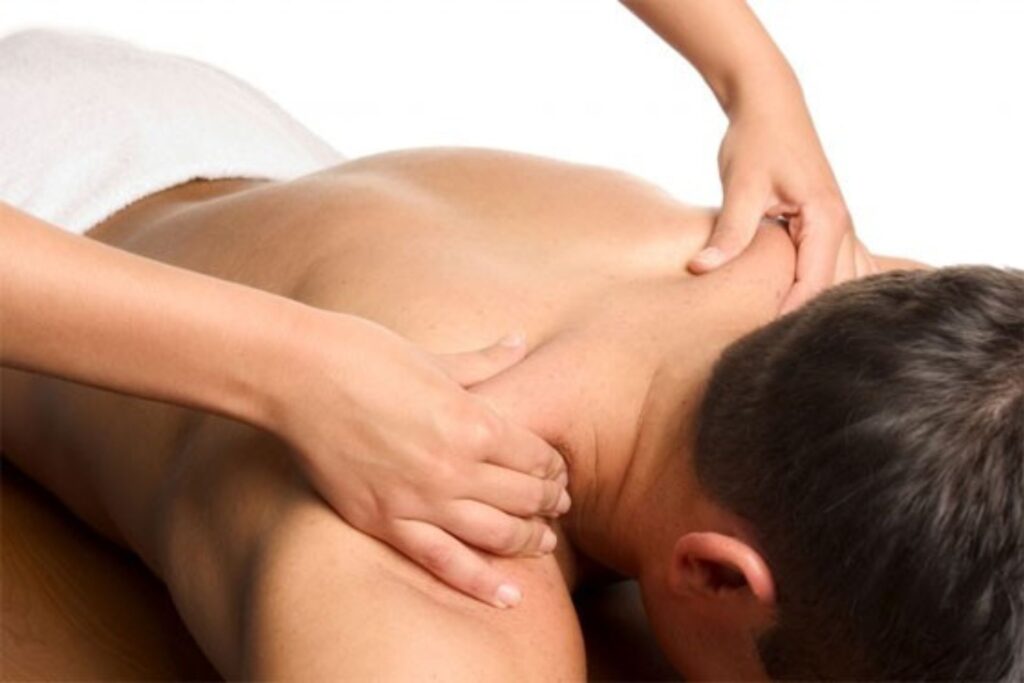
If you’re feeling sore, stiff, or stressed, massage therapy is an excellent place to start. It helps ease tension, boost circulation, and support recovery. Whether you’re dealing with tight shoulders from work or post-workout muscle fatigue, massage can help you feel better, faster.
But if your pain keeps coming back…
If something feels “off” and you can’t quite explain why…
If your posture, breathing, or movement patterns feel stuck…
That’s where osteopathy might offer something different.
Osteopathy is especially helpful when you’re looking for root causes, not just symptom relief. It’s for the times your body is trying to say something, and you want someone to help interpret the message.
Osteopathy is helpful when something isn’t resolving, when a pattern keeps returning, or when you want to understand what’s actually driving a problem rather than managing it indefinitely. It’s also worth considering proactively, not just reactively, if you want your structure to support your performance rather than quietly limit it.
The key is understanding what each approach is designed to do.
Massage supports the muscles and soft tissues from the outside in.
Osteopathy looks at the bigger picture — from the inside out.
They’re not interchangeable, but they can both play a role in helping you move, feel, and function better, depending on what your body is asking for.
Closing Thoughts
After 20 years of hands-on work — first as a massage therapist, now as an osteopath — here’s what I’ve learned:
How we see the body shapes how we treat it.
Massage therapy taught me to feel what was happening in the tissue.
Osteopathy taught me to ask why it was happening in the first place.
Both have real value. Both can help. But they speak different languages. And when you understand the difference, it becomes easier to choose the care that actually fits what your body needs.
If you’re chasing tension that keeps coming back, if you’ve had the same massage in the same spot for the same problem for years, or if something still isn’t quite right despite doing everything you’ve been told — that’s a sign the pattern needs a different kind of attention.
Structure governs function. When the structure changes, the tension changes with it.
That’s the difference.
Interested in learning more?
You might like these articles: