What is Osteopathy?
Most people discover osteopathy because something hurts. A shoulder that won’t move quite right. A lower back that protests after long drives. A neck that tightens up at the worst possible time.
Or because something has been hurting and off and nothing else has helped yet; not massage or physiotherapy and often not even pain medications.
But pain is often the last thing to appear, not the first. It’s the body’s way of saying, “Something’s been off for a while.”
That’s where osteopathy comes in.
Instead of chasing symptoms, osteopathy looks for the story behind them — how one part of the body affects another, and what can happen when that balance is restored.
What Osteopathy Really Is
Osteopathy is a hands-on approach to understanding the body and restoring balance.
It’s built on one key idea: structure and function are connected.
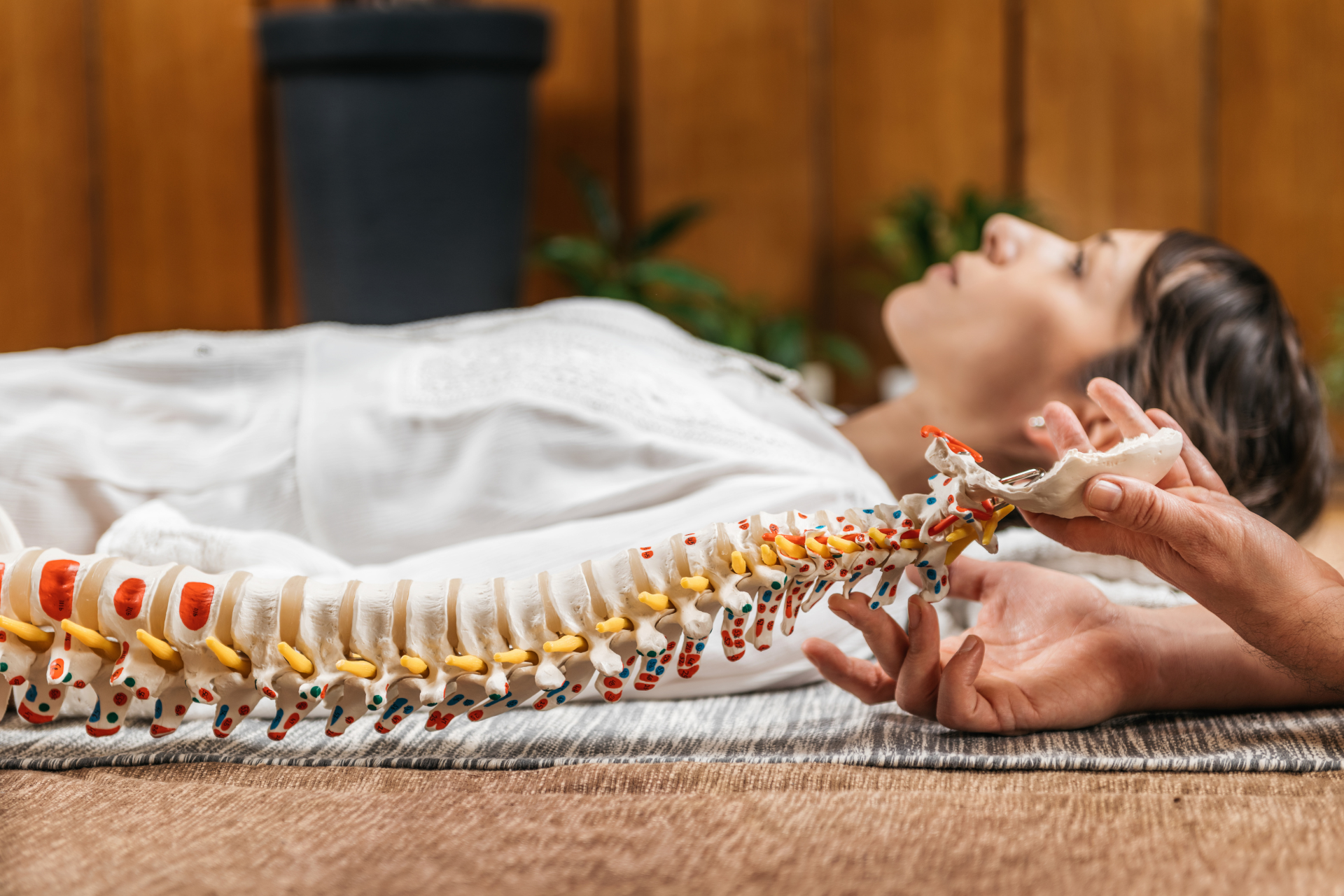
The way the body is built — how bones, muscles, fascia, and organs relate — affects how it works. When one part stops moving well, other parts adapt to keep the system going. Those adaptations can lead to tension, restriction, or pain over time.
In more formal terms, osteopathy is a manual therapy that works with the body’s structure — its joints, muscles, connective tissues, and internal systems — to improve function and promote self-healing. Rather than targeting a single symptom, it aims to restore the body’s natural ability to move and regulate itself.
Osteopaths study anatomy, physiology, and biomechanics in depth, using that knowledge to assess how the body compensates after injury, strain, or long-term habits. Treatment involves precise, hands-on techniques designed to improve mobility, circulation, and overall coordination.
What makes this approach powerful is that it respects how adaptable the body really is. It’s constantly compensating for old injuries, habits, or even how we sit at a desk. But compensation has limits. Eventually, the body starts sending signals, like stiffness, fatigue, headaches, or that familiar ache that returns again and again.
Osteopathy works by helping the body move the way it’s meant to — efficiently, fluidly, and in sync.
A tight calf might change how the hip rotates.
An old ankle sprain might alter how the spine stacks.
Even breathing patterns can affect shoulder or rib mobility.
It’s all connected, and that’s the foundation of osteopathic care.
Who Osteopathy Is For
Osteopathy can support people dealing with ongoing discomfort, movement restrictions, or patterns that don’t fully resolve.
It’s often helpful for people experiencing:
- Back or neck pain
- Joint stiffness or limited mobility
- Headaches or recurring tension
- Postural strain from work, sport, or daily life
- Injuries that haven’t fully settled
- A general sense that something feels “off,” even without a clear diagnosis
Because osteopathy looks at how the body functions as a whole, it’s used by people from all walks of life, including athletes, office workers, parents, and active adults, anyone who wants to move more efficiently and feel more at ease in their body.
What Makes Osteopathy Different
Many people confuse osteopathy with massage, physiotherapy, or chiropractic care. While there’s overlap, the intention and assessment process are different.
Instead of isolating a single muscle or joint, osteopathy looks for patterns, the underlying relationships between different parts of the body.
Think of the body like a symphony. If one instrument drifts off-key, the whole piece starts to sound off.
Osteopathy doesn’t just tune that one instrument; it listens for how the entire orchestra fits together.
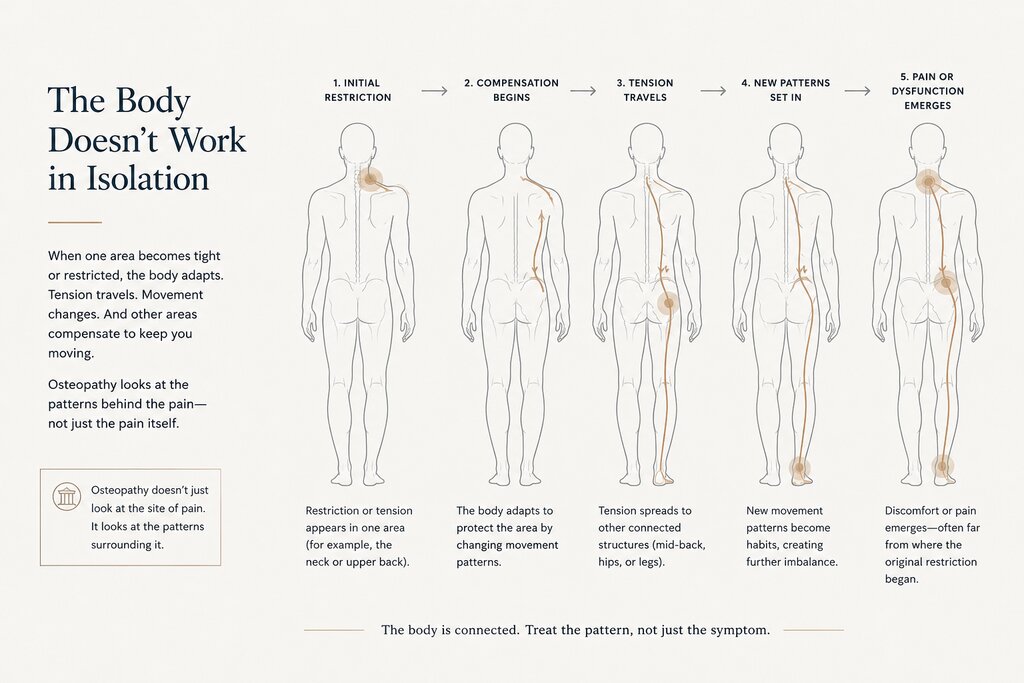
That means treatment can vary widely. One person might need gentle joint articulation, another might respond better to fascial work or subtle adjustments that free tension in the spine. The techniques are tailored, not formulaic.
This whole-body focus is why people often notice unexpected results — better breathing, improved sleep, or even sharper balance — after addressing what seemed like an isolated issue. When the body moves better, everything starts working together more efficiently.
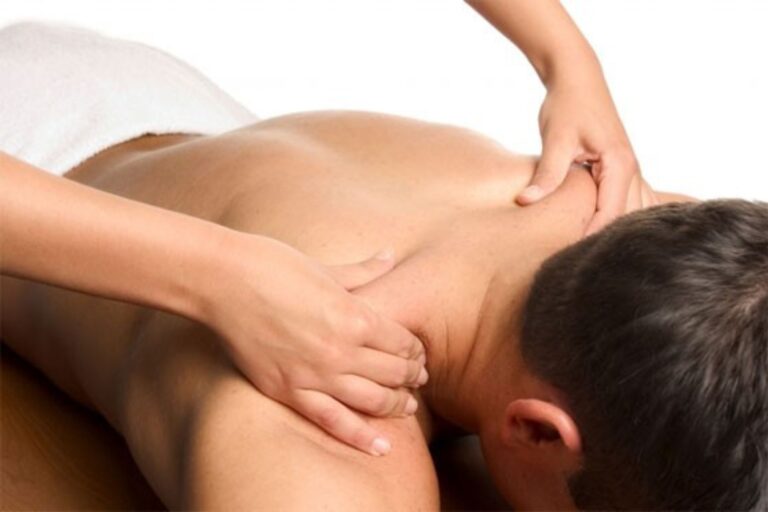
Many people aren’t sure how massage and osteopathy differ, or when one approach might be more helpful than the other. Understanding the distinction can make it easier to choose the right kind of care.
The Role of Fascia
To understand osteopathy, you need to understand fascia.
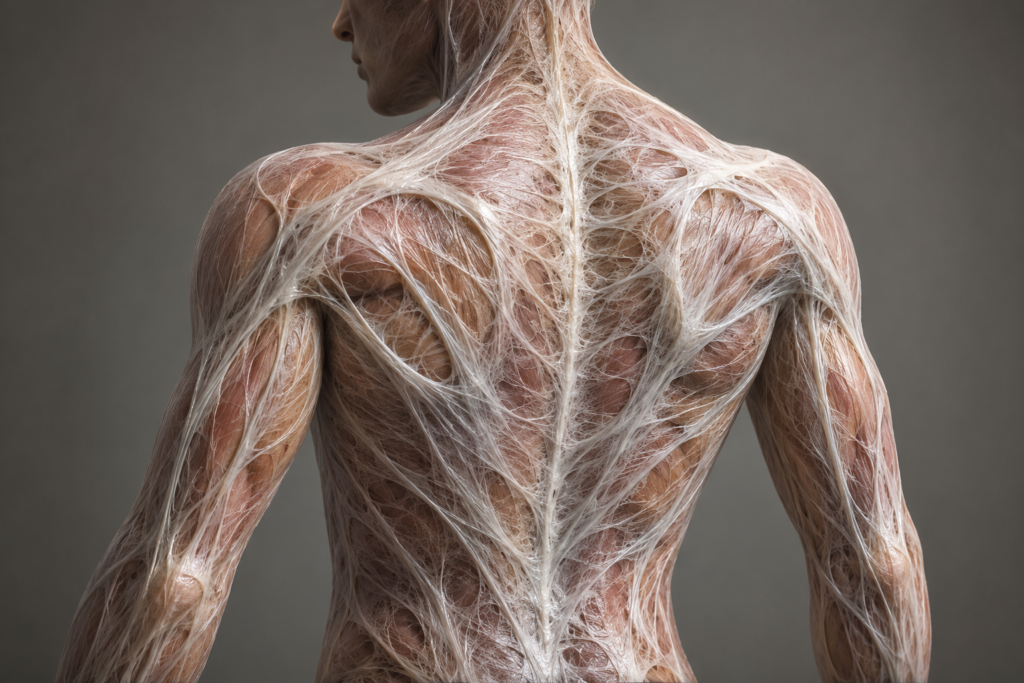
Fascia is often described as the body’s hidden web — a continuous layer of connective tissue that links muscles, bones, nerves, and organs.
Picture the threads in a spiderweb. When one area tightens or tears, the tension travels across the entire structure.
That’s how a restriction in your ribs might influence your shoulder, or how a scar on your abdomen can affect your posture. How tension held in one corner of the body quietly loads up another.
Fascia is also sensitive — it contains nerve endings that respond to pressure, movement, and emotion. That’s part of why stress, tension, or even how we breathe can subtly shift how our body feels and functions.
Osteopathic treatment works with fascia to restore that natural glide and adaptability. By easing restrictions, the body’s communication network improves. Movement becomes smoother, pain lessens, and people often describe feeling more “connected” in their own skin.
For a deeper look at how fascial chains work, this article on how everything is connected shows how fascia plays a central role in osteopathic treatment.
What to Expect in a Session
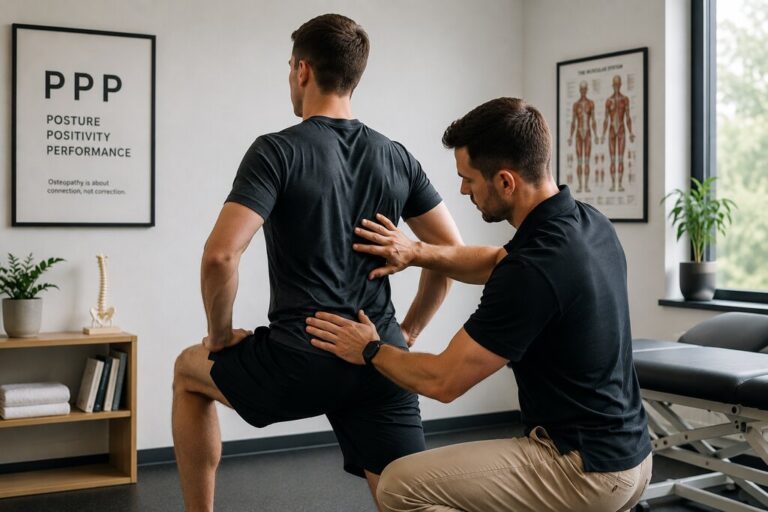
A session typically begins with conversation and assessing how the body moves, where it compensates, and what patterns might be contributing to discomfort.
An osteopath will often assess areas far from where it hurts. Someone with recurring back pain might actually have restricted motion in the ribs or hips. A runner with knee pain might be compensating for an old ankle sprain. Identifying those patterns is what leads to lasting change, not just temporary relief.
Treatment itself is hands-on, gentle and precise. It might include soft-tissue work, joint articulation, or subtle adjustments — techniques that support how the body naturally self-corrects. It’s tailored to what the body actually needs, not a formula applied to everyone.
After a session, people often describe moving more freely, standing taller, or simply feeling “more like themselves.” Those changes aren’t just mechanical, they reflect the body finding balance again.
What an Osteopath Actually Does
An osteopath doesn’t just work on joints.
The work includes soft tissue, fascia, the nervous system, and the vascular structures — all of it, because all of it is connected.
Andrew Taylor Still’s other foundational principle was this: the role of the artery is absolute. Healthy tissue needs circulation. When structure is restricted, circulation is compromised. When circulation is compromised, healing slows, performance drops, and the body starts compensating, which creates new problems elsewhere.
Restore the structure. Restore the flow. Let the body do the rest.
Why It’s About More Than Pain
While osteopathy is well known for relieving pain, its true focus is optimizing how the body functions. When the body moves well, it performs better, recovers faster, and experiences less strain in daily life.
Which is why osteopathy is just as relevant for the athlete trying to find an edge, the professional sitting at a desk all day, the parent carrying a toddler on one hip, or anyone who wants to move through life with less restriction and more ease.
If your structure is sound, your body is more efficient. You generate more force with less effort. You recover faster. You’re more resilient to the demands you put on it.
When movement improves, so does energy, focus, and overall well-being.
The Bigger Picture
Osteopathy has been around for 150 years. In that time, the understanding of fascia, the nervous system, and the body’s integrated nature has grown enormously, and continues to validate what Still proposed back in 1874.
The body is one system. Structure governs function. And when you treat it that way, as a whole, interconnected, self-regulating system rather than a collection of parts, the results are different.
Not just for how much pain you’re in. But for how well you actually perform.
Want to understand the deeper connection between structure, the nervous system, and performance? Explore the PPP Framework, where posture, positivity, and performance work together.